What Is A Homeowner?
I'm a faux-expert on home buying
because I've done pretty much everything wrong during my history of buying
houses in several states from Nebraska to Colorado to Minnesota. In total, I've
attempted to own a dozen homes, actually lived in 6 of those, and I've
"owned" two. When the media jabbers about "homeowners,"
they are (as usual) abusing the English language both intentionally and
ignorantly. The bullshit reads something like this "The homeownership rate of 67.9 percent was 3.8
percentage points higher than the rate in the second quarter 2019 (64.1
percent) and 2.6 percentage points higher than the rate in the first quarter
2020 (65.3 percent)." That is pure crap. Less than half of that 67.9%
actually "owned" anything. On the other hand, this is information,
"About 37% of U.S. households are “free
and clear,” meaning they no longer have a home mortgage to pay, according to a
Zillow data analysis. This number ticked upward after the Great Recession and
over the past 10 years the share of homeowners paying off their mortgages has
risen 5.5 percentage points." Americans learned something about
debt? Who'd have thought? As a great American screenwriter once wrote,
"Inconceivable!" ("You keep using that word, I don't think you
know what it means.") One thing I've learned about the goobers who are posing as "conservatives" in the last 40 years (post-Reagan) is that the only threat they are fearless (and clueless) in the face of is debt. But 37% of us have, apparently, become actual conservatives.
In the United States, the closest
you can come to owning a home is to not have a mortgage on your
house. [You'll never really own it because property taxes and your local
government can take away your home at any time.] When you move into
your first landlord-free rental home, it feels like ownership because you can
paint the walls any idiot color that pleases you and if you want to dig up the
backyard and make an underground whiskey-drinking clubhouse where there used to
be grass and flowers, you probably can do that. (Unless the neighborhood
C&Cs outlaw that kind of behavior.) However, until that mortgage is paid
off, you are just renting from a bank instead of a landlord (who is also
probably renting from a bank). So, first get the language straight. Don't
bullshit yourself. You don't own it, until you own it free-and-clear of
debt.
How to Take the
Emotions Out of Decisions
Along with not bullshitting yourself
about "homeownership," try to avoid making an emotional decision
about a house purchase. Most of our decisions are made, at least in large part,
emotionally and that is where the subsequent "buyer's remorse" comes
into play. When my wife and I decided our 2.3 acre, 2700 square foot, 120
year-old farm house was more of a maintenance load than we wanted in
retirement, I started doing my area search based on some of the items that will
come later in this essay: environment, taxes, recreation, scenery, etc. After
I'd narrowed the search to 3-4 'burbs in the Cities and a couple of small
towns, we started looking at houses. After viewing about a half-dozen houses, I
realized we might never agree on what we both liked. My wife is an impulse
buyer and hates to shop. I am overly analytical and hate to get ripped off. She
was willing to "settle" for any damn thing to get out of the whole
house hunting process. I wanted something that could almost guarantee my money
back if we decided we didn't like the house or the area. We were never going to
agree on anything if we kept up those tactics.
 One evening, I started to list the
things I expected a home to have if I were going to be happy in it. After I
finished my list, I showed it to her and she added a few things to the list.
That was a little helpful, but not really a decision-making process. So, I put
some numbers (points) on the list we'd made. We discussed/argued those items
and points for a good while until we had a decision list with which to score a
house. After that, we'd visit a house and immediately afterwards argue out how
we thought the house scored on our spreadsheet. If a house didn't break 75%, it
went into a trash file and we didn't discuss it again. Over 75% and we would
start the process of deciding how much we would be wiling to pay for it.
Unfortunately, for me, that original spreadsheet lived on a Samsung tablet that
I managed to lose in the Chicago train station 5 years ago. So, I
"reinvented" the spreadsheet (right and above) just to give you and
idea what might have been on our decision list. Many of the items on this list
were on the list that we used to find our home, but the points and descriptions
are my best estimates. As you can see, the mythical house I was scoring on this
example came up short with 66 points (66% positive) and it wouldn't have been
given any more consideration.
One evening, I started to list the
things I expected a home to have if I were going to be happy in it. After I
finished my list, I showed it to her and she added a few things to the list.
That was a little helpful, but not really a decision-making process. So, I put
some numbers (points) on the list we'd made. We discussed/argued those items
and points for a good while until we had a decision list with which to score a
house. After that, we'd visit a house and immediately afterwards argue out how
we thought the house scored on our spreadsheet. If a house didn't break 75%, it
went into a trash file and we didn't discuss it again. Over 75% and we would
start the process of deciding how much we would be wiling to pay for it.
Unfortunately, for me, that original spreadsheet lived on a Samsung tablet that
I managed to lose in the Chicago train station 5 years ago. So, I
"reinvented" the spreadsheet (right and above) just to give you and
idea what might have been on our decision list. Many of the items on this list
were on the list that we used to find our home, but the points and descriptions
are my best estimates. As you can see, the mythical house I was scoring on this
example came up short with 66 points (66% positive) and it wouldn't have been
given any more consideration.
In the 70s, I bought a house under
pressure (wife and kids) and without any rational criteria and was so miserable
with the experience that I didn't consider going through that risk for another
15 years. I bought a house when I was living on my own in Colorado and had
absolutely no pressure to make the move and nobody to argue with about what the
house should be like. The efficiency and value I got from that house buying
experience taught me as much as any other economics lesson I've learned. I was
only sorry when I felt that I needed to sell that house, unlike most of the
houses I've sold before and after. Emotions contribute nothing useful to a
business transaction and house buying is nothing but a business transaction. It
isn't a "home" until you make it one and lots of things will factor
into a house becoming "home."
On to the messier stuff of home
buying and owning.
Property Taxes and Local
Government Research
Property taxes are one of the the
first items to look in an area when you are house shopping. Wisconsin, for
example, makes a big deal out of it's "moderate" income taxes
(especially on the rich and corporations), but Wisconsin property taxes are
almost double Minnesota's notoriously high taxes. City governments that are out
of control are also very typically opaque. So, my first suggestion for any
prospective home buyer is "Find the city website and look at the city
budget. Look for every department head's salary and the pay scale for every
city and county job. If that information isn't available, pass."
Seriously, if you can't look at the details of how your local taxes are being
spent, you should know those taxes are being flushed down a local toilet and
the locals are either so lazy and/or corrupt that it will only get much worse
before it has any sort of chance at getting better. This is not a negotiable
item. Few things in life are black-and-white, but any government that is not
transparent is corrupt and you can, and should, take that information to the
bank.
[A notorious example of that kind
of city is Atlantic City, NJ which is still
infamous for being the poster child for the end result of mindless wild
spending by a city government that hid behind a "municipal employees
privacy" cloak. It didn't help that AC was a prime example of where
Trump demonstrated his "business skills" by leveraging himself and
his Trump Hotels and Casinos scam, so
that when his house of cards fell a
collection of banksters and Atlantic City fell with them. By the last
decade, Atlantic city had what was politely called "a bloated municipal
payroll." After massive cuts to city employment, Atlantic City taxes are
almost reasonable today; approximately $3,000 on a $120,000 home, but in 2015
& 2016 that same house had a bill of more than $6,000 in property taxes and
many people were forced out of homes "they owned" during that period.]
Unfortunately, this is a lesson I
learned the hard way, a couple of times. When I started looking for a place to
retire, Red Wing, MN was high on my list of favorite places that would be near
my kids and grandkids. It turns out, Red Wing looks as nice as it does because
of the Xcel Energy Prairie Island nuclear power plant, which has generated
somewhere between 20% and 40% of the city and county's property tax revenue since
the 1970s (nobody in local government appears to be willing to talk about what
that percentage is, or they are too lazy to know). When the Xcel plant closes, the city and county
property tax revenue will take a huge hit and big decisions will have to be
made about local government expenses. If past history is an indicator of how
those decisions will be made, it's pretty obvious that the bureaucrats in
control of local government will try to pile property tax increases on local
residents, driving property values down, closing local businesses, and creating
a downward economic spiral in the area that could take years or decades to
correct. As much as I like the area, if I had researched this issue properly,
Red Wing would have never been on my retirement area search list.
About thirty-five years ago, I was
living in California where my cost of living and responsibilities made it
impossible for me to consider taking on the debt necessary to buy a house. Home
loan interest rates were in the mid-teens, the country had been in a variety of
recessions since the early 70's, and my single income barely covered expenses
for my family. I could, however, buy a house and property outright in the small
town (Scribner, Nebraska) where we'd lived. I
found a house that needed a lot of work for (wait for it) $5,000 cash
and over the next few years I took my vacations in Nebraska doing remodeling
work on the house until it was extremely livable. My plan was that, when I
graduated from college in California, I was going to move back to Nebraska,
take my QSC Audio manufacturing and engineering experience, buy the large
garage/shop next door to my Nebraska house, and start an audio equipment manufacturing
facility in a town that would have had spectacularly low startup costs, lots of
semi-educated and trainable labor, and decent transportation.
About a year before I would have
left for Nebraska, my business plans leaked out in that small town from a
friend who was helping me repair the house and who was hoping for a job in my
new company, and the city powers-that-be started their opposition to my
business. Small towns do not like "new anything," especially new
people and ideas. Small town mayors and bureaucrats would rather see their
villages dry up and die rather than have to adjust their lifestyle, power
structure, and (most importantly) employee wage expectations. First, the mayor
started dumping trash from his business (a grain elevator) in my unoccupied-at-the-time
property's backyard. Then, he tried designating the property as unsafe because
of the trash that he'd dumped on the property. I fought that off, but
discovered that the city had obtained the property next door, where the shop
was, and blocked any plans I had for a manufacturing facility next to my
property. I sold the house, in 2005, for about $14,000 (cash, again). Overall,
it wasn't a money-loser and I can't say I'm sorry I didn't end up in small-town
Nebraska for the last 30 years, but it was an object lesson in inbred Midwest
politics that I had to learn again 25 years later.
Fifty years ago, a Texas cowboy
"old guy" I worked with (He was probably 60 at the time.) gave me a
piece of advice I've attempted to figure out since, "Decide where you want
to live and live there. Decide what you want to do and do it." The things
we use to decide where we want to live are things like culture, economics (jobs
and cost of living), recreational options, scenery and environment, and should
include taxation and government transparency. Red Wing got clobbered by
the Great Recession but because the city was so shut off from local citizens
and self-insulated from economic reality, it took an extra 2-3 years for the
city government to figure out it was clobbered and make minor and insufficient
adjustments to city employment which added an extra 5-6 years to the recovery.
Xcel is going to decommission
Prairie Island which will transfer
the county and city's obligations primarily to the local homeowners. I've
written about this before, in Facing Red
Wing’s Reality, if you want to know more about it. The end result of this
piece of advice is "do your homework" on local politics and
government before deciding to put your money down in an area. It could matter
far more than you imagine.
Taos, New Mexico is a good example
of what you should be looking for in city government transparency. Simply by
Google searching "Taos New Mexico City
Budget" you'll land on a page that will link you to a PDF that details
the city's income and expenses and Taos
County is just as transparent. Anything short of that is unacceptable and
high risk. It is always safe to assume that when government is hiding
something, it is something government should not be doing.
Do You Need An
Agent or a Broker?
Real Estate agents and brokers are
too often nothing more than obstacles to home ownership. Unless you are totally
clueless about buying and/or selling a home, the less money you spend on a real
estate agent (as a buyer or seller) the better off you are. A realtor is more
of a "part-time facilitator" than an actual sales person and they are
rarely a useful legal advisor. One thing they are not is your "friend." Like used car salesmen, a realtor is someone who gets paid to pretend to be your friend for a LOT of money for minimal work. A typical house sale, $200,000 for example, will return a realtor $12,000 on a 6% commission. In a slow market, the seller's realtor might invest 50 hours and $500 in expenses. That works out to about $230 per hour for minimal skills and moderate effort. And that is in a slow market. In many of today's "hot markets," that hourly investment is likely to be a small fraction of 50 hours. PLUS you could also be paying a similar commission to the buyer's realtor. Most likely, the buyer's realtor will put in a lot more effort and time than will your realtor, but still . . . $230/hour? That is nuts.
I met a guy on the bicycle trail not long ago who was recently retired and thinking of downsizing before the Trump Plague put a hex on all things financial. He has a nice house on the Minnesota River in Eagan. He called a realtor who bragged about having sold 200 houses in the last 3 months and who claimed the sale value of this house was pretty much what it had sold for 20 years ago. The guy told the realtor, "If I wanted to give away my house, I'd get married." And chased him out and put the idea of downsizing on the back-burner.
I told him that he should look at comparable sales in his immediate area and add $20,000-50,000 for the river view and access and either look for a realtor who agreed with that assessment or sell it himself. Anyone individual who can sell 200 hours in 3 months isn't getting prime prices for anything he's selling.
My wife and I sold our last house through a
fixed rate agent, HomeAvenue. In 2014,
we sold a $240,000 home and paid our realtor
less than $1,000, but our real estate lawyer was worth every penny of her
$2,000. Thanks to contract requirements added to our selling agreement by our
lawyer, the buyers had to add $15,000 to their offer to cover the cost of their
realtor and other unnecessary purchase cost luxuries. We had recommended that those
buyers find a good real estate lawyer instead of an agent, since they had found
our house on their own. But they went the mindless traditional way and it was
expensive for them and counter-productive. The only action we saw from their
agent during the entire house buying transaction was him hitting on our attractive,
but married agent during closing.
Since we were our own sales
department, we did have to keep after the house and hold our own open house
events. We polished everything in the house every week until it
was sold. Because we'd moved into our new home first, we emptied the house we
were selling to make it look larger and to minimize the imagination necessary
for buyers to visualize themselves and their stuff in our space. That emptying
process occurred over a few months and we noted that the less stuff there was
in the house, the more positive the showings went. In the end, all we had in
the house was an air mattress we folded up and stored in a closet each day and
a table that held our advertising materials, a log book for visiting realtors
when we weren't there, and cookies and coffee during our open houses. We mixed
up the cookies at our new home, but baked them in the house we were selling to
add that aroma to the house showing.
Unless you are desperate to buy or
sell, it's worth trying to minimize the surprises you might encounter from a
real estate contract. Agents will tell you "this is standard, everyone
does it," but that is not true because
I don't. For example, when I'm the buyer I make the seller pay for as much
as possible, up front, and reimburse the seller for some of those expenses at
the closing. The seller will pay for the home inspection, the title company
expenses, title insurance, and closing costs until we actually close on the
deal.. Of course, the seller will pay their selling realtor's charges, instead
of folding that expense into my closing costs My way the seller has more skin
in the game than me and if they decide to back out it won't be cheap. I have
done that three times, as a buyer, and every time we've closed on the
house. Every time since 1992, the seller’s agent has been surprised when he/she
discovered what their clients had signed.
I did not learn these lessons the smart way. The first house I tried to buy in
1992, in Colorado, was during the early stages of a housing rush. Colorado real
estate was crushed during the Reagan recession years and housing prices fell
50% or more between 1984 and 1992. Neal Bush's
Silverado S&L fiasco and the Reagan S&L deregulation was a big part of that economic disaster. However,
when I was trying to buy a house, prices were just starting to recover. I
offered the asking price on a house that I really liked in an area that I really loved.
NOTE: That "really liked" statement was me admitting to being gullible and a willing victim. Remember
that Texas cowboy's advice from earlier? After getting tangled up in the
concept of auctions and how that institution can screw up rational thinking, he
told me, "Never 'want' anything until you own it." The idea is that
"wanting something" will convince you to overpay for it, but if you
can hold off desire until after you buy a thing you'll have a better shot at
avoiding buyer's remorse.
My first Colorado broker was a lazy
doofus who was the poster child for "worthless real estate goober" and he didn't provide
a penny's worth of advice and couldn’t manage a timely response if you put a
gun to his head. The seller's contract he presented to me allowed the seller to
continue to accept offers after accepting mine and all of the inspection,
title, and other purchase costs were my responsibility. I was about $3,000 into
buying process when the seller got a better offer and took it. Fortunately,
about $1500 of that expense could be shifted to another house if I found one,
but I learned several things from that lost $1500. Of course, I dumped that
broker and started shopping for houses on my own. It didn't take long for me to discover that not being attached to a realtor freed me up to look at houses that were exactly in my price range, had my requirements, and were in areas where I wanted to live.
The first Colorado house offer I made
on my own had a few "unusual contingency" exemptions: the seller paid for the
inspection (to be reimbursed at closing), the seller would accept the appraisal
value if it were lower than my offer (Years ago, appraisals were done by people
who weren't idiots who barely looked at the house being appraised" at the asking price.), title
inspection costs would be covered by the seller (to be reimbursed at closing),
and any improvements indicated as "necessary" by the inspection would
be appraised (by my inspector) and those costs would be deducted from the offer
and accepted by the buyer or repaired by the seller and inspected before
closing. Those stipulations saved me a lot of money on that house purchase because
the appraisal was $3,000 under my offer and there were $1800 in initial repair
costs for problems the seller hoped I wouldn't notice and an inspection wouldn't uncover.
I hope it isn't necessary to mention
that I want none of those requirements on a real estate sales contract
when I am the seller. In fact, after my last selling experience, I'm pretty
much selling my next house as-is, regardless of what effect an agent might
think that has on the selling price.
When you are selling a house, it is
important to realize that a realtor has little-to-no motivation to sell your
house for the best (highest) price. Look up that whole story and the data in
"Freakonomics: Real
Estate Agents, Revisited." Some of their findings were summarized in a
Stanford University study that states, "We find no evidence that the
use of a broker leads to higher average selling prices, or that it
significantly alters average initial asking prices. However, those who use
brokers sell their houses more quickly." Well, duh. If you price the house
below market value, the odds are good that it will sell more quickly. So, if
selling fast is your goal, use a realtor or broker. If $20,000 to several
hundred thousand dollars means nothing to you, realtors are your best friends.
You can buy equally valuable friends at your local bar by shouting "the
drinks are on me" for a lot less money.
Realtors are more often than not,
incredibly lazy. I'd lived in my Little Canada house for 18 years and we'd done
a massive amount of work to the place during those years. Every year, the
county would try to arbitrarily raise the property valuation (and taxes) on the
house and every year I would contest their guess-timates. Every year, we would
compromise on a reasonable valuation. In late 2013, when I listed the
house it was valued at $140,000 by the county. The first half-dozen realtors I
talked to wanted to list it for that price. Our lawyer thought it should sell
for $300,000 based on comps and her obvious bias toward our home. (She is a
friend, after all.) The last full price realtor I talked to was willing to “try
selling it at $180,000,” her company also wanted an 8% commission with most of
the selling expenses charged to me upon closing (pictures, open house prep,
even the cookies she claimed she’d bring to each open house). What I took away
from that last meeting was that everything any realtor had offered to do for
me, I could do better and cheaper. Keep in mind that I was retired and had
plenty of time to do those things.
Our Little Canada house was a quirky
100+ year old farm house with lots of artwork and odd spaces and at least 70
years of remodeling and expansion from several previous owners and ourselves. Several
realtors couldn’t imagine anyone being interested in that house. A few were in
love with the place and many of the people who came to our open houses were
interested at a time (Winter 2014-15) when our realtor told us her traditional
realtor friends weren’t getting any interest in their open houses. Three months
after listing the house with HomeAvenue
it sold for $242,000, $60,000 more than the highest estimate any selling
realtor told us we could get and $100,000 more than the county tax assessor’s
appraisal value.
Do You Need A Real
Estate Lawyer?
Usually, I don't bother with buyer's agents at all. I know how the internet
works and I can find houses to look at anywhere in the country without any
assistance from an agent of any sort. I know a really good real estate lawyer
and I know how to find one in other areas. Generally, agents are wasted money
and real estate lawyers are the only way to go.
I totally lucked into the idea of
contacting a real estate lawyer on my way to almost losing a whole lot of money
on a house purchase. The Little Canada house was partially financed by the
employer who had moved me to Minnesota in 1996. Part of my employment offer
included company paid expenses for both the sale of my Colorado home and the
loan points, closing costs, and other expenses on a Minnesota home. My realtor
was a rookie and her mentor was mostly absent. The realtor had found the house,
but was otherwise clueless. When the first closing date came and went without
either the seller or his agents showing up, I went on to the appropriate newsgroups
(pre-WWW users groups) and started asking questions about sellers’ responsibilities.
I was advised to find a real estate lawyer. I asked “How do I pick a real
estate lawyer?” I got really lucky and a real estate lawyer from South Carolina
gave me a list of questions (with answers) to ask prospective real estate
lawyers. I took his list in hand and started calling Twin Cities lawyers who
listed themselves as real estate lawyers. Lawyer after lawyer failed to answer
a single question competently or they threw a pout and wouldn’t even bother
answering my questions. Then I landed on Val Parranto-Davis. Val
answered every question brilliantly and willingly, gave me a fee estimate, and pretty
much took over the whole processes of bringing the seller and his realtors to
heel.
After that experience, I wouldn’t
consider buying or selling a house without a real estate involved on my side.
Too many things can go wrong and realtors are mostly useless when there are any
legal conflicts or complications.
How Much House Do You Need and
How Much Money Do You Want to Spend?
"Net selling price" is a
thing to keep in mind, always, when you are the seller. Real estate agents have almost no motivation to
get top price for you or to find the right house for you. That 6% (high)
commission on a $200,000 sale is $12,000 and a $250,000 price earns the agent
$15,000. $3,000 isn't much if it takes an extra month to earn it, but $35,000 is
a lot more for the home owner. Odds are good that the agent will be urging you to
accept the first offer you get, even when there is a house bidding war going on
in the area. At the least, set a minimum "take home" amount you are
willing to accept for the house, before you list it, and stick to that no
matter what kind of pressure you get from your agent. (She/he's not really
"your agent," anyway.) Likewise, in my experience agents are always
trying to "jack up" the top price you're willing to pay for a house.
I've told agents "$100,000 is the absolute most I'm willing to spent"
and they show me nothing but $150,000-and-above places because they know I can
get the credit. I don't bother those agents after one outing like that.
I never want to own the most
expensive house in the neighborhood. My step-brother paddled against the current of that
rule before he died in 2017. Between 2011 and 2015, he "invested" almost $3M in a neighborhood of homes that averaged $300k. In 2018, his widow sold the place for $500k. I freak out over having lost $1500 in 1991 and change how I do business for life. I can't even fathom what
it would feel like to lose $2.5M. Always give yourself some headroom between what you hope to sell for and what the typical house in your neighborhood sells for.
Every house I have ever owned was a
"fixer-upper." I'm sure there will come a time when doing my
own repairs and upgrades isn't possible, but it hasn't happened yet. You can
generally assume that you'll be paying close to $100/hour for most repairs and
that it will take you 3-4x as long to do the job as it would a professional. However,
you will almost always do a better job and use better materials. Since the house is my home while I am there, I am in little-to-no hurry to get any job done and usually do a pretty good job as a result. And I learn something new with every project. That's worth something.
Using those buying tactics, I have at least recovered my investment on every house I've owned except one, which I had to sell during the 70s recession for a painful loss. Even that house could have been a lot worse because friends who stayed in that town ended up losing 50-70% of their home values during the next decade of constant recessions. We lost about 25% of our initial costs when that small town went from 3 houses on the market in 1976 to more than 300 in 1978 after losing three manufacturers and more than 2,000 jobs in a few months.
Staging A House for
Sale
One of the best pieces of advice I
ever got from a real estate professional came as we were closing on our current
home. I had mentioned some of the odd folks we'd had looking at our for-sale
house and she said, "It has to look perfect. It must look as if there is,
literally, nothing that would need to be done before moving in and being
comfortable in the home." At the time, we'd been talking about the fact
that our kitchen stove was old and looked dated and some buyers had insisted
that the house should have all new appliances.
I said, "What about the 2 acres
of yard and half-dozen gardens that need almost constant
maintenance?"
She replied, "That's 'the
dream.' Most young buyers won't consider at that at all. They just don't want
to have to fix anything."
She also suggested that buyers needed to be able to visualize themselves living on the space, which meant that a lot of my wife's murals and all of our furniture needed to go. Friends who had visited and even loved that house objected to us painting over mountain and sky scenes and removing almost all signs of color and creativity in the house. We also emptied the house to the point that when we stayed over during a weekend open house, we slept on an air mattress that we could hide in an an upstairs kneewall, along with our bedding. The only furniture left in the house when we got our first two offers was a kitchen table where our contracts, contact information, and a portfolio of the yard and garden pictures resided. It looked huge inside.
The stove we'd been discussing was a 1980's stainless Jenn Air
in excellent condition and I doubled-down on disassembly and polishing the
visible parts of the stove. It went past gleaming into glowing. We also cleaned and waxed and oiled every surface
of the house to the point that we didn't want to use the sink or bathtub
because we felt that we'd need to buff them up afterwards. You could see your
reflection in every mirrored, tiled, and shiny surface in the house. Every
wooden surface had been sanded, stained, finished and oiled and looked better
than new. We got our offer fairly quickly, in the dead of winter, when real
estate was generally moving slowly. Lucky for us, we closed on the house, in
March, before any serious yard work was necessary. 
A year later, one of our old
neighbors was visiting friends in Red Wing and told us that the new, young
owners had not figured out any aspect of lawn care and the yard got so deep one
of our other ex-neighbors mowed it for them. They'd never asked how to start
the riding lawnmower I left with the house. One of the ads they ran to attract
renters even had their parents and a kid plowing through the backyard,
knee-deep in overgrown lawn. I suspect 'the dream' turned out to be a lot more
work than they expected. We were happy to have missed the spring clean-up.
On your end, forget "the dream" or any "dreams" for that matter. Buying a house is a financial transaction. Don't listen to any of the sales hype about "investment" or status or neighborhood (How would a realtor know what the neighbors are like?) or any other dreamy sales crap. Look coldly and clearly at the property, as if you were planning on flipping it for a profit. The house isn't going to make you hipper, smarter, or even happier. It is just a place to store your stuff and to sleep. For most of my life, my house wasn't even a place to sleep, since I was on the road or at work more often than not. Once you own the place for a while and discover that you like the neighbors, no obnoxious unnoticed irritants emerge, and that the previous owners didn't leave you with a million dollars in stuff to fix, you can call it home and, maybe, even love it a bit.
Monopoly Money
Something I learned with my latest
(last?) house purchase was, if you can stand the gamble, make the largest good faith
deposit you can stand. In my situation, I was buying a bank-owned foreclosure
and the bank had been trying to sell the house for almost a year. Our realtor
said, "You need to make your offer within at least 5% of what the bank is
asking for them to take the offer seriously." I'd already made a few
offers on the many foreclosed houses available in Red Wing that summer and
watched my offers get outbid, based on realtor advice. (Two of those offers
ended up bouncing down to me when the "winning" bid-makers couldn't
come up with money or financing. That is not the first time that has happened
to me, either.) I made a bid that was 20% below the bank's (Wells Fargo)
asking price, but I also sweetened it with a $10,000 deposit and a
no-contingency offer. They didn't know it, but we would be paying cash for the
house at that price. I suspect the bank thought my $10k might end up being free
money if my loan didn't pan out. They rejected two or three asking price offers
in favor of mine. Then, for the next month Wells Fargo tried various tactics to
get me to increase my offer and my lawyer reminded them of the illegality of
those tactics. (Yep, I paid her another $1,000 to negotiate with Wells Fargo
for me. Never ask a real estate agent to do a lawyer's job.) Their last tactic
was to pretend that they "couldn't find the title," thinking if they
drug out the closing I might change my mind. Local real estate was beginning to move a
little faster and I suspect they hoped for a better offer if they could weasel
out of mine. A call from our lawyer and a law suit threat and complaint to the state real estate board and we closed the next day.
If you are going to try the big
deposit tactic, be sure to read the contract to make sure there are no nasty
loopholes that might cost you the deposit. I trusted my lawyer to do that job,
but I read the contract a few times myself before making minor alterations and
signing it. I'm still pissed about losing $1500 thirty years ago, but I'd be really pissed about losing $10,000.
As for the loan source, I've
borrowed from big and little banks and, mostly, the experience was pretty
mediocre (small local bank) to miserable-and-untrustworthy (Norwest Bank loan
absorbed by Wells Fargo and sold to Countrywide
which was assumed by Bank of America). During the Great Recession when
mortgage rates were falling through the floor, I decided to renegotiate my home
loan with my lender of the moment (Bank of America). No surprise, the bank did not want
to bother with swapping out a 6.75% loan for a 3% loan. My real estate lawyer
friend suggested I look at a savings and loan. I found a local S&L, Affinity Plus, and applied for a home loan
with them. My credit is excellent and even during the Great Recession we owed a
lot less on the house than it was worth and Affinity Plus bent over backwards
to make the loan easy for me. The rate was 2.3%, which was a lot better than
the best BoA could have offered. Turned out, Wells Fargo via Norwest Bank,
Countrywide, and BoA via Countrywide had not released the lien on the property,
even though the loan balance for each of those fine institutions was $0.00. We
missed the loan closing date, because of that hang-up, but the S&L assumed
responsibility for clearing up the title and liens and charged me zero (0)
points for the loan as a self-assessed penalty for having to delay the loan
switch. Interest rates had slithered back up a point or two in the meantime,
but Affinity Plus stuck with our original deal and made a customer for
life.
Maintenance Is A Bitch, Then You Die
That bit, earlier, about "the dream" will seem pretty hilarious within a few months of living in your new home. it doesn't matter if the house is 200 years or 2 months old, it will need some level of maintenance immediately and lots of it over however long you live there. It never stops. Insist on a new roof before you sign the purchase contract, the new roof will get blown off in the first windstorm after you move it. Make the old owner replace the lawn with sod and you'll discover termites came with the sod and the house will fall down a year later. New appliances? Sure, just know that most electro-mechanical device failures are known as "infant mortality." The odds are almost as good that your new washing machine will die in the first six months than six years later. Trees die, the seals in your new dual-pane windows will fail because the contractor didn't allow enough expansion room in the framing, and you'll have to mow the lawn, trim the hedges, repair the floor when your kid drops a hammer on the bathroom tile, and the plumbing will always be there to overflow and require a holiday weekend visit from a plumber at emergency rates. Stuff happens to a house and it happens constantly. No more calling the landlord or apartment manager to fix the stuff, now you either fix it yourself or pay someone $100-per-hour-and-up to fix it; if you can find someone reliable to do the work. (Lots of trendy areas are so trendy that there is nobody anywhere near the area who can actually do real work.)
There is an alternative, which is ignore everything but a fire in the kitchen or a flood in the basement and hope the problems fix themselves. Unfortunately, I've witnessed that tactic in my own family. Some of that was probably handed down, through genetics, from my father who absolutely believed that anything worth doing was worth putting off until it really needed doing. As a result, about half of his last two homes consisted of unusable space with sparking outlets, leaking plumbing, and wind blowing through gaps in the basement walls. Oddly, when my parents died and my step-sister put their house on the market, those problems didn't even come up in the house inspection. At the other end of that spectrum, I've always been anal and overly committed to making sure everything in my house works and the last home inspection I suffered was a total demotivating endless list of idiot "2014 code requirements" that in no way could ever be practically applied to a 1884 farm house. If it were up to the child inspector, I would have to knock the house down and have it rebuilt to today's construction requirements. And it would still have 2 1/4 acres of land to maintain and a basketball sized driveway to shovel in the winter.
If you don't like maintenance, you should find a nice apartment and live there. Home "ownership" is not going to be something you will enjoy.
If you know about my alter-ego, Geezer with a Grudge, I hold grudges for .
. . ever. I have done anything I can to dissuade anyone who asks from doing
business with Wells Fargo or Bank of America, since. Sometimes I make 'em
listen to the whole gory story.


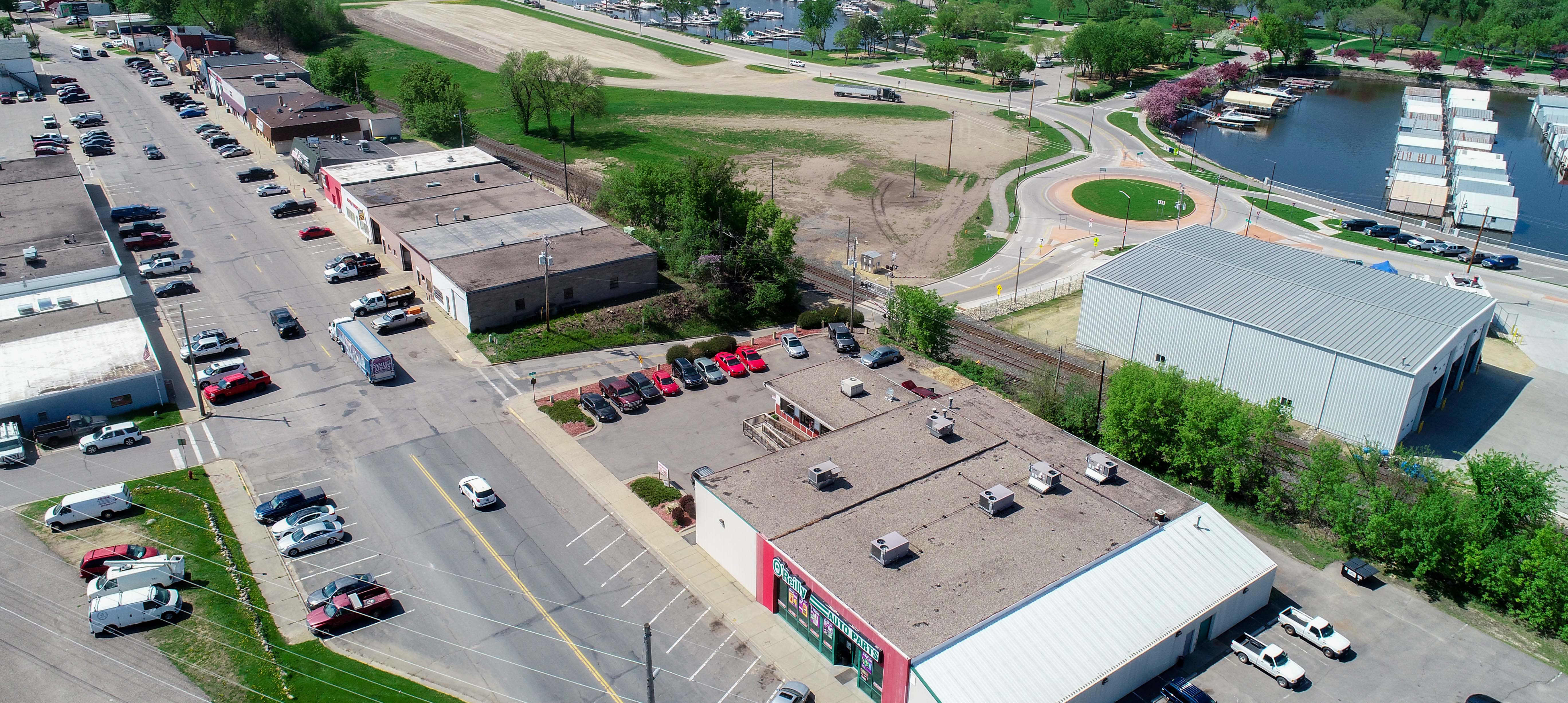 The city “planners” have been hacking away at a weird idea to convert the only significant riverside area of the city into some sort of “shopping district" and a misbegotten concert venue. The project name is the "


