The Rat's Eye View - A low-level look at a screwed up society, asking the important question, "Why do conservatives hate America?" The Rat's Eye view of the world of business, politics, religion, and other human flaws and fantasies as seen from the rubble rats climb over every day.
As for trying to convince you of anything, I subscribe to Mr. Twain, "Never argue with an idiot. They will drag you down to their level and beat you with experience.”
My sister, a devout traditional Christian, often asks me how I can face death believing it is the end of the road. The question baffles me. My father, for instance, who was also a fairly traditional Christian was terrified of death; especially at the end. So, obviously, faith isn’t enough of a comfort for some. Lack of faith in an afterlife, so far, has been incredibly comforting for me.
The image of life that comes to mind is the trip up and down a really large waterslide. The early stages of life, for many of us, are a long slog up a bunch of stairs to “the top,” which might not be much altitude in the end but the climb is pretty much the same for most of us. Growing up, education, career, family, friends, economic ups and downs, and the rest of life are all part of that climb up to the top. Mostly, it’s a slog for everyone but the very rich or very lucky. We all end up at the top, though. You could look at retirement being the time you spend on the platform waiting for your turn down the slide. Or maybe the years after the kids have (hopefully) moved away and into their own lives and you get to enjoy the remaining calm, productive years of your life. Some people get a couple of decades on the platform, some a few minutes, some get tossed headfirst from the top of the ladder to the slide. For many of us, the platform is particularly uncomfortable because of our fear of heights, discomfort from the long climb, The ride down the slide represents the moments at the end of life; often a few seconds to a minute or two as we slip from life to death. There is some research that indicates that there might be intense pain, fear, and/or hallucinations in those moments and that portions of the brain may live for as long as 10 minutes after “death.” Regardless of how much brain activity there is or how long it lasts, it will always be a tiny fraction of the lifetime we’ve lived and, as such, it’s a fast slide down into death and oblivion. And then the ride is over. I do not see any of that as either scary or undesirable. Honestly, I feel like I’ve experienced more of life than I needed to see; especially life with other humans. The level of stupid that appears to be state-of-the-species is mostly depressing. This country has long worshipped corruption, greed, injustice, and outright evil and I’ve seen enough of that. The fact that there is no afterlife, no more requirement to put up with idiots and criminals, is damn comforting. In fact, it might be the best thing about being old and having more years behind than in front of me. If I had the slightest bit of doubt that there might be more of this bullshit after death, I would be far more afraid of death than I am in knowing that religion and superstition are man-made bits of bullshit designed more to control the masses than to comfort them.
A decade or so ago, John Stewart went on “Firing Line” with Tucker Carlson and some other Fox nitwit(s) and asked them to “just stop” everything they were doing. He told them they were “hurting America” and that they were making no useful contribution. And of course, they were and still are; hurting America, that is. Nobody on Fox makes a useful contribution as anything other than aural fertilizer. The same goes for Facebook and similar web ilk.
I recently met a reasonable educated person, a retired lawyer, who imagines himself to be scientifically literate because he follows “Facebook Science”; which assume is Facebook’s Skeptical Science clown car. From that ridiculous source he has learned a bunch of pseudo-technical words that he doesn’t understand, a ton of red herrings to use like lawyerese debate gibberish, and he decided that climate change is a farce because his Facebook “skeptical scientists” have told him that carbon is a reflector in the upper atmosphere that shields the planet from the sun’s heat; as opposed to being an element distributed throughout the atmosphere that absorbs heat and prevents it from escaping the atmosphere and disipating into space. The terms he’s memorized and random red herring collection of talking points allow him to believe he understands some of the science.
Not only is his “scientific knowledge” laughable, he is completely oblivious to the way Facebook works. He imagines that by years of “liking” various climate-change denier Facebook pages he has been exposed to a diverse set of opinions from scientific sources. He doesn’t realize that Facebook’s engineers and psychologists have designed a collection of tools to keep him coming back to the opinions that reaffirm his biases. There is no better reason to avoid “social media” than this dumbing-down echo chamber effect.
And there is no better reason to ask Facebook to “just stop” everything they are doing. If they won’t, the next best thing is to either require them to limit social media conversations to unimportant trivia; or we hunt the bastards down like rats in the corn crib or put them out of our misery. Ideally, every country would follow Germany’s lead and limit Facebook’s ability to track and manipulate consumers to the point that the company can’t make money. At the least, anytime some uses Facebook as a reference point for any adult conversation, you should laugh in their face until they leave. The best thing for everyone would be for Facebook, Twitter, and the rest of the social media crapbucket to die an unnatural and quick death. I don’t care how it happens, but it should happen quickly before we have no world left to fuck up.
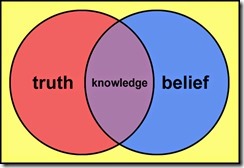
One of the often fatal flaws in human behavior is deciphering the difference between “knowing” and “believing.” The less you know, the more likely it is that you won’t know what you don’t know and that you will believe things that are not knowable. Got that?
It’s often the same with “need” and “want.” You want a cell phone, but you don’t need one. People survived for a few 100,000 years without them. You don’t need a car, you could live closer to work or take a bus or train. You choose to live where you feel you are forced to drive rather than walk, bike, or take mass transit. You choose to do work that makes you feel the need to drive. You need food, water, and, depending on where you live, shelter and clothing. You don’t need clothing if you live someplace warm, like humans did (and do) in Africa for most of our species’ evolution. There are thousands of things people in western societies imagine they need that are merely wants: entertainment, luxury, territory and wars over territory, philosophy, money and economics, education, and so on. But try living without food and water for a very short time and you’ll discover the meaning of “need” and shortly afterwards you won’t exist at all.
The same goes for knowing verses believing. People often say they know there is a god and an afterlife or magic and spirits and ghosts or alien invaders from Alpha Centari who stick probes up human asses for inscrutable reasons. All bullshit. None of those things can be proven in any way. Even some of the things we know are hard to prove, but most of the things we believe are just made-up fairy tales of varying qualities and quantities of idiocy.
Gravity, for example, is consistently demonstrable. However, physicists have only uncovered some parts of a complete theory of gravity, regardless of how well we know it works. We know two bodies are attracted to each other in some proportion to their mass. We know there are some qualities of mass and gravity that current physics does not fully explain. Scientists act as if they believe in the current definition of gravity because it mostly provides accurate information; except in extreme astrophysics and sub-atomic examples. When a better explanation comes along, scientific belief will change to reflect that information. That is how theories work.
Biologists know that the theory of evolution is a fact. Examples of evolution in a single human lifetime have been demonstrated in viruses, bacteria, and even small animals under extreme environmental stress. There is no theory of “intelligent design,” only wild speculation based on superstition and desperation. A theory is “a well-confirmed type of explanation of nature, made in a way consistent with scientific method, and fulfilling the criteria required by modern science.” Religion meets none of that criteria in any way. Interjecting a magical “designer” into an explanation of biology or physics only throws off every inquiry based on that assumption so that all conclusions derived from that concept are demonstrably flawed.
We may desperately want there to be a god who cares about us, individually, and it is possible that some people actually need to sustain that belief to cling to what passes for their grip on mental health. That, of course, is a perversion of “need” in the real, physical world and it may turn out to be one of the many reasons humans are not a sustainable species. Replacing the kind of insanity that comes from spiritual insecurity with the delusion of religion does not get to the core of the insanity.
Throughout human history, there have been thousands of religions and probably tens of thousands of a wild variety of gods. While most of the gods looked and acted suspiciously like humans, there were (and are) more than a few animal gods, weird multi-limbed humanoid gods, and outright fantastical things that Marvel Comics couldn’t have dreamed up. All of those gods had one thing in common, some group of humans invented them and believed in them. All of those whacky humans believed they knew how the universe worked and their religion and gods were at the core of that belief. So, pardon me if the religion of the century hasn’t impressed me any more than the ones from previous centuries.
One of the vital reasons the founders of the United States of America chose not to base the Constitution and the country’s foundations on religion is that humans have historically gone to weird and terrible lengths to sustain their beliefs. If a nation (as many have) adopts a religion as a core value, it is necessary to force everyone to pretend to believe the tenants of that religion; no matter how ridiculous those concepts may be. When the physical world contradicts almost any of the religion’s beliefs, the promoters/priests of the religion are forced to “burn the heretic” to protect the religion from reality. In many instances in history, that reaction has set back human progress, society, and security enough cause societies and countries to collapse into religious and moral decadence. It is, in fact, a clearly stupid idea.
Even being an atheist requires belief, just not as much. I cannot say I know there are no gods or afterlife. I can say I absolutely believe individual humans only get one shot at life and that what we call our being or spirit dissipates into nothingness the moment we die. Weirdly consistently, a superstitious person can say they absolutely know there is a god and an afterlife. They can say that, but without a shred of evidence what they are saying is “I don’t know the difference between knowing and believing and I don’t care.” No rational person should take that sort of person seriously, ever.
The serious aspect of people who are unaware of the difference between knowing and believing is the danger those people pose to the stability of a society and to the sustainability of the species. History has demonstrated that superstitious people will commit mass murder and cultural suicide in the service of their delusions. So, while their beliefs are nothing to consider seriously, their threat is very real and constant. People driven by belief are dangerous to all life on this planet.
My wife and I have had diametrically opposed views of how the world works for most of our 50+ years together. She is a fairly spiritual person. I’m not only not spiritual, but I dislike all forms of magical belief. For a lot of years, she was a traditional Christian followed by the Pagan/Gaia thing followed by something all her own now. I’ve been atheist my whole life, at least since I was a kid. For her, it is a motivational issue, I think. For me, it is a practical thing.
For example, we were talking about the global warming issue this morning. We somehow got into the whole “we’re killing the planet” conversation, which I do not believe is likely. Sure, if we managed to fiddle around with black holes and create one that gets out of hand (Can a black hole be “in hand?”) we might figure out how to destroy the planet. But if all we manage to do is raise the planet’s average temperature a few degrees the planet will survive just fine. Or we fire off all all 89,012 trillion tons from our 14,175 nuclear weapons, 92% of which belong to the USA and Russia, we might vaporize the atmosphere. The planet will still have a molten core and the ability to attract ice asteroids and other resources to rebuild its atmosphere. The planet will survive until something damages the core or, in about 5 billion years, the sun burns through its current supply of fuel and that calls it quits for our solar system. I think the key point in the global warming discussion should be not that we’re trying to “save the planet,” but that we’re trying to save our species. Now, I’m not a big fan of humans and absolutely believe that at least90% of everything humans do is shit, but if humans want a target to shoot for it’s our own survival not the planet’s survival.
If you look at this cutaway of the planet’s construction, it’s pretty obvious how little effect our fucking around will have on the life of the planet itself. We can certainly screw up that thin layer we live in, but the planet is totally unaware of our existence; let alone the universe.
My wife believes the planet is a living thing with some, or a lot, of sentience and intent. I don’t. I think the planet is just what we see it being: a rock filled with molten rock and minerals that lucked into a few ice asteroid hits providing the planet with water and an atmosphere; which has been burned off a few times by other asteroid hits and volcanic activity in the last few billion years. Likewise, my wife still clings to the idea that humans have something like an everlasting soul. I don’t. I think we’re just one of millions of life forms on this planet and in the universe that live and die and are as inconsequential as every other life form here or there. We’re as self-destructive as army ants and about as mindful of our environment and our place in it as that most destructive insect. No soul, barely sentient.
We’re both aware that our opinions on life and the universe are just that; opinions. Neither one of us is committed to the “rightness” of those opinions. So, the argument comes in whether one opinion is more useful than the other.
My kick against spiritualism comes from practical application. I think we’d be better served if we treat the planet like our life support system; like a spaceship that needs maintenance and careful resource management. If we get careless with either maintenance or resource management, we all die. If we let things go long enough, we won’t have the resources to recover and we’ll all die as a result.
The problem with spiritualism is that humans naturally take the easy, magical way out. While English political theorist Algernon Sidney wrote the words, "God helps those who help themselves", there is nothing like that in the dogma of any religion I know of. In fact, the reverse psychology appears to be more common and that allows people to pray to their deity to "fix" their messes instead of doing the work themselves. That is true to the point that when firefighters put out a forest fire, house fire, or whatever else is burning, religious people will regularly "thank God" for doing the work that they saw done right in front of their faces by other human beings. I don't know how stupid people can get, but that is damn close to impossibly stupid.
So, our argument is about which philosophy is most likely to cause humans to behave in a way that might extend our species’ lifespan and, ideally, the other species that share this planet with us. I don’t think any form of spiritualism will ever be helpful. My wife and, most likely, you will disagree, but I don’t think it will matter because we’re not a smart enough species to care either way.
My sister sent me a Facebook post with this video and a question, “This is very interesting, Would like to have feed back from you. I hope that we can agree to disagree on this subject. I would just like to know your beliefs. Calm cool and collected conversation.”
My first response was pretty poor, “Poorly explained options, DNA did not 'happen by accident,' it happened after billions of years of failed and partial failure natural selection experiments. So, this protagonist has a well-scripted set of misleading questions and jumps unprepared people with his propaganda routine. No surprise that their answers get him the answer he expects and most likely edited to refine. A more detailed explanation of Dawkins' position is found in The God Delusion, but this video isn't about obtaining rational opposition it's just an effort to demonstrate a cheesy debate tactic. It would be interested to see the entire input to this video, because it's obvious the editing was intended to direct the conversation in a very limited way.
“Since the whole God argument is so childish, most atheists don't put enough thought into religions' propositions to be good anti-superstition debaters. Logically, that would be wasted time. Dawkins has done so because the Big Three religions have become 'death cults' bent on destroying life on this planet to create a test for their various Armageddon stories. It's an admirable goal, but hyper-unpleasant because you have to listen to so much silliness. The whole 'something from nothing' argument is not satisfied simply by shamans' inventing a god and placing him/her/it in charge of creating something. That's just human arrogance to imagine that we can go "poof" and invent the answer to a scientific question with 1500 year old sheepherders' tales.
“We're currently involved in a pretty scary natural selection experiment, as a species. Just in the last 25 years, 75% of flying insects have vanished from the planet. That will have all sorts of effects on every species up the food chain, including humans. It's pretty obvious from the fossil record and even human records that lots of natural selection experiments have failed or been modified. That DNA is either lost or combined with surviving lifeforms. Did the gods screw up with those animals? If they can screw up something as simple as a butterfly, how did they manage to create an infinite universe?
“If humans are going to survive, we're going to have grow past superstition. If we don't, we certainly don't deserve any claim for love for our children and their children. Being the cause of the 6th Extinction in the name of religion is nothing to brag about.”
The question and the smarmy “interviews” stuck with me throughout the day. Mostly, I worked my ass off all day and a long history of going through these questions slowly came back to me. Thirty years ago, a philosophy instructor loaned me a book, Abusing Science, The Case Against Creationism, by Philip Kitcher (a UofM professor) that attempted to answer all of the questions posed in this video. It’s a terrific book and, oddly, still in print. The problem with asking about evolution and DNA, the origin of the universe, and the building blocks of life from a religious perspective is that the questioner already believes he has the answer, “God works in mysterious ways. We can’t know the mind of the maker. And so on.” The answers from a scientific perspective are all hyper complicated, requiring an education in astrophysics, biology, genetics, geology, and other disciplines. Abusing Science goes to those places and experts and obtains those answers, but most of us (probably all of us) are already involved in complicated and specialized lives and we’d have to spend a few days preparing an answer to these poorly framed and leading questions. Dawkins has presented several of these rebuttals, in case someone actually cares enough to hear them. Here is one, for example:
In 1957, my mother died of hepatocellular carcinoma (liver cancer). In 1957, medicine had no answer, no solutions, no options for someone even suffering from stage one hepatocellular carcinoma. Religion still offered the brilliant and perfectly useless, “God works in mysterious ways. We can’t know the mind of the maker. And so on.” Today, "people with early-stage liver cancers who have a liver transplant, the 5-year survival rate is in the range of 60% to 70%.” Religion is still stuck with “God works in mysterious ways. We can’t know the mind of the maker. And so on.” If religion was a valid area of thought, it would have evolved something useful, like medicine has done, by now. In fact, since Christianity has been around for about 1500 years and has accomplished exactly nothing of use to any human, other than becoming a highly refined money-making scheme for churches, televangelists, and assorted con men, generating wars and warriors for practically any political excuse, and a huge variety of inequalities and injustices.
That’s where religion draws its strength, though. Uneducated people who desperately hope for a magic solution to the problems of existence, survival, power and money are not attracted to the complexity of the real world. “God works in mysterious ways,” is a good answer for them because real answers require a serious effort to comprehend. People, as a species, are fairly lazy. Easy, useless answers are more acceptable to most people than reality.
A friend tried to justify some part of that position by saying, “That ecological disaster you referred to was caused by science.” No, it wasn’t. If we were a scientific species or even marginally led by scientific leaders, we’d have dramatically dropped the world’s population 50 years ago and the cliff we’re heading toward would be far more manageable. Religion and its bizarre interpretations of sheepherders’ gibberish squalls like a stuck pig when any attempt to slow down the world’s population gets any traction. Religion is the core to practically unsolvable problem in the world and will continue to be until something either ends humanity or superstition. I’d bet on superstition outlasting our species. It is core to our flaws. As Voltaire said, "Those who can make you believe absurdities can make you commit atrocities." Hoping for the end of life because some halfwit convinced you that you'll be in paradise after life is the ultimate absurd atrocity.
What does it take to beat down a really stupid idea? Apparently, the dumber the idea, the harder it is to kill. The "benevolent dictator" fantasy appears to be a suicidal concept that is founded in charisma and fairy tales and doesn't seem to be any less popular today than it was 2,000 years ago. Conservatives and libertarians are incapable of getting more than a few feet from that wet dream every time democracy shows the slightest sign of stumbling. Religion is another example of humanity's love for stupid ideas.. The more fantastic the concepts behind a religion, the harder it is to defeat.
When my kids were infants, one of the first arguments my wife and I had about child raising was about the inclusion of traditional holiday fantasies in our nuclear family celebrations. Obviously, I opposed this indoctrination into stretched credibility. Easter Bunnies, Santa Claus, the Tooth Fairy, ghost stories, the Boogie Man, and honest politicians all belong in the history books that chronicle variations of child-abuse activities. We compromised. She brought these fantastic tales into our home, I ridiculed them. I'm doing the same routines with my grandchildren, much to my daughter's mother-in-law's disgust. She's Catholic and the rest of us are agnostic, including the grandkids.
I suspect that much of human gullibility is rooted in these pre-religious rituals. I'm not even in the running to be considered an early discoverer of the link childhood fantastic characters and rituals to the foundations of religion and conservative thinking in adults. If you can convince a kid to believe that a fat man and a dozen reindeer can deliver thousands of tons of gifts to rich little kids of the industrialized nations, introducing that same kid to gods and angels is a small step into irrational "faith." Still, it's amazing how strongly people cling to these incredibly stupid ideas and how well they defend the most unbelievable of their strange fantasies.
Let's be honest, if we can manage that for a moment. The best argument that followers of the god fantasies can provide is "you can't prove he doesn't exist." Science is all about disproving theories, but some theories are simply too dumb to bother with. This is one of them. To disprove the existence of the several dozen variations of god descriptions roaming around this earth with approximately 4 billion unevenly distributed subscribers to those variations, all of science could be tasked to invalidate these whacko fantasies until life on the planet vanished and we'd still be without absolute proof.
We can't disprove the existence of the Easter Bunny, Santa Claus, or the Boogie Man, either. Hollywood constantly reminds us of that inability by repeating the same tired cartoon plots every generation. However, almost no one asks scientists to dedicate time to that foolish pursuit. The violent, fantastic, irrational accomplishments credited to gods and goddesses are no less impossible than the Santa Claus or Easter Bunny stories, but some folks appear to swallow those more somber fantasies without a moment of reflection or the slightest application of logic. Childhood conditioning must play some part in that inability to apply common sense to religious stories.
There is no more primitive urge than the tendency to suspect that magic is involved in the things we don't understand. The earliest cultures sacrificed animals and each other to a huge variety of gods and goddesses. Practically from the start of our species, we've created idols and other artworks, sang songs, burned, drowned, and skewered disbelievers, and paid witchdoctors and priests to interpret bones, tea leaves, weather signs, and literature. You'd think that we'd have grown out of this silliness by now, but I've recently read that as many as 90% of the world's population believes in some kind of afterlife or supreme being. Of course, many of those folks are so dumb that they ask their priests to find a page, in whatever holy book they subscribe to, describing ailments similar to those they suffer so they can tear out the pages and boil them for medicinal tea. "Faith" of that sort is comical and irrational, but I don't see anything in that to be particularly admirable or evidential. The overabundance of stupid, ignorant, superstitious people is not proof of a supreme being. It's certainly not evidence that evolution was guided by some clever, divine engineer. It is proof that the human animal is exceptionally gullible.
Otherwise seemingly rational people appear to believe in incredibly irrational fantasies. That seems to require many non-believers to ask for tolerance and accommodation of these beliefs. Now that is clearly a non-scientific response. If I tell you that I think the Tooth Fairy is the Lord Almighty and that losing baby teeth before the age of three is a sign that a child is a non-believer and a heretic, would you allow me to sacrifice your early-tooth-maturing child? If I decide that L. Ron Hubbard was the second coming of the Son of God and that his Dianetics drivel is the "new word of God," requiring me to strap on explosives and blow up the nearest Catholic (non-believer) grade school, would you think I might be insane? No? If so, you might be too tolerant to survive.
If not, why, then, is similarly insane belief, action, and sermonizing in the name of Christ, Mohammad, or Abraham more respectable? Clearly, it's not. Not that many years ago, it was considered poor manners to discuss any aspect of religious belief in polite company. People weren't less insane during that brief period of American civility, we just weren't as proud of our insanity as we are today. The fantasy and fiction of 2,000 year old sheepherders and priests is no more believable or holy than today's Harry Potter books and movies. They are just stories, some good, some godawful. Some of those stories are interesting enough to be considered valuable moral guidance, some are so violent, evil, and inhuman that they should be all the evidence a sane person needs to know these books are absolutely not the word of a supreme being. They aren't even up the literature standards established at the founding of this once-democratic nation.
[This is a fantasy short-story I wrote some time ago, during the end of the Reagan years. I decided to dump it into the Rat Rants because I didn't know what else to do with it.]
The Russians and the Americans decide, in a fit of teamwork, to "utilize the resources of our two great nations" and split the cost of a manned space station and giant radio telescope. The Star Wars program is scrapped as part of the deal. Since the government never gives up funds it has managed to tax out of the public, the funds are spent on the space station. The space station gets finished and the two nations have more tax money to spend. They spend it on a space manufacturing facility. The two nations' research and development industries have been working a lot on space and a little on consumer/industrial products. They are working smarter and at an elevated technical base after closing their mil-industrial facilities and moving the really valuable engineers to more productive tasks.
The Russians and the Americans are once again the world leaders in technology. They move all polluting manufacturing tasks off-planet.
The Japanese want part of the economic pie. The Americans and Russians are wealthy enough to buy great toys and the Japanese want to build great toys. The Japanese are not afraid of the Russians and not controlled by American regulations. The Japanese begin SALT XIII negotiations with the Chinese and Koreans. With Japan in the lead (barely), the Eastern block begins work on a space bridge, with facilities in the center of the span for zero gravity manufacturing. The bridge is complete in 6 years. The bridge is profitable in 10. The Eastern block makes great toys for the Americans and Russians.
The American consumer market is very wealthy and can afford to share the wealth. The Russian consumer market is about as profitable as the American market was during the 1960's. Many developing countries test the new Russian market for consumer products. The Russians and Americans have perfected space habitats and are considering terraforming experiments on a twin planet in Alpha Centauri.
The West Germans and East Germans get united because the Russians have their eyes on the sky and don't pay attention to terrestrial boarder shifts. The Germans collaborate with the Swiss to "keep technology in the hands of artisans who are concerned with workmanship." They make tremendous gains in superconductor and particle force theory and develop a superconductor-based generator that powers a drive that harnesses the anti-mass characteristics of the atom. They are commercially competing with the Eastern block for the 50 year East/West reunion.
The Eastern block has made ownership of space habitats a cost-effective, consumer product. Thousands of families move into the asteroid belt to work and live in the non-national manufacturing facilities.
The "Keep Terra Clean" movement restores natural balance to the earth's environment and life forms. Thousands of acres of rain forest are re-planted. The atmosphere of the earth becomes controlled and the ozone is re-designed to be 100.000000001% efficient. The oxygen generated by the system is sold to the space colonies. The rare gases, metals, minerals, and chemical combinations are sparingly parceled out to the colonies. This trade finances a cottage industry based, high-technology, back to nature life-style economy throughout the earth.
The Americans and Russians are somewhere out there.
You want to know why all the space junk is floating around the planet? That's why we did it!
"Why's it got to be built? It's a bypass. You've got to build bypasses . . ." And with that Douglas Adams describes all of human intelligence on the subject of "progress" and consumption. Growth and consumption and progress are all linked together in the corporate social model. You have to build, population has to grow, and all of this bulding and growing is somehow linked to the progress of humanity as a species. Nevermind the mountains of trash, the acres of abandoned buildings, or the mass of the population who can't keep up with progress and end up on welfare or homeless or living on the margins of society. That's the price of progress.
In a country where less than 1% of the population owns more of the nation's wealth than the bottom 95%, progress seems to be defined by pushing that statistic further apart. Anytime a politician questions the human and social cost of marginalizing the overwhelming majority of the population that politician will be accused of "social engineering."
Of course, social engineering is what every tax system, economic system, and government does. It is social engineering when you tax one set of activities and don't tax another. There is even more social engineering happening when you reward a set of activities with government handouts (think "oil"). In short, social engineering in a socialist society (like ours) increases taxes to restrict the activities it wants to discourage and reduces or eliminates taxes on the activites it wants to encourage. The dramatic difference between a theoretical capitalist society and a theoretical communist society (two imaginary social systems that have never been and will never be practically applied) is that Adam Smith's magical "invisible hand" or Marx's equally unlikely wisdom of the "worker state" corrects the steering of the social system. A short experience with big business will destroy any faith an intelligent person has in the brilliance of the invisible hand and any experinence in or with government employees will do equal damage to the hope that big government can do anything efficiently or intelligently.
So, we keep building bypasses, bigger and more expensive freeways, trinkets and useless gadgets, and (worst of all) adding to human population with the speed and intelligence of termites. The closest thing we have to a philosophy of population is that the population needs to increase because there need to be more young people in order to support the growing population of old people. Of course, this argument means that as the population increases and old people become more demanding and expensive even more babies have to be made to provide support. Obviously, this is an insanely selfish social system, but it's also stupid. When it comes to human reproduction, the smart multiply cautiously and the foolish reproduce like rats in a sinking ship.
Only radical conservatives are dumb enough to believe that resources are endless. You have to be completely math-deficient to imagine that a finite planet can provide infinite resources. Fortunately for our economic system, there is no shortage of radical conseratives or math-phobes. (They are usually the same characters.) We are well-stocked with people who believe that they can possess "family values" and greedily use up all of the world's energy resources in a single generation. This is the basis of an idiocracy.
This weekend, I'm polishing off a book titled, The No Asshole Rule by Robert Sutton. The book reinforces a lot of the arguments I've made in the past on my old Rat's Eye View website from the days when that collection of essays was mostly about business practices and management/mismanagement.
However, toward the end Sutton has a chapter titled "The Virtues of Assholes" where he attempts to explain the success of so many certifiable assholes (one prime asshole he constantly returns to is Apple's Steve Jobs). After describing how some assholes manage to become rich and powerful, he lists three "blind spots" successful assholes often have. One of those blind spots is that "experienced victims use [defensive measures) to protect themselves from cruel and vindictive actions, measures that have the side effect of shielding assholes from realizing the damage they inflict . . . victims avoid their oppressor's wrath by reporting only good news and remaining silent about, and even hiding, bad news." Sound familiar?
In 1816, the north eastern United States went through a catastrophic "year without a summer." The prevailing theory describing the reasons for that "last great subsistence crisis in the Western world" is that a record low solar activity and the 1815 eruption of Mount Tambora caused record world-wide crop failures at least 200,000 deaths in Europe and similar devastation in North America and China. 200 years later, science is in a position to be able to predict the results of this kind of event and, even, allow for planning that could moderate the effects.
The real question is, are scientists likely to provide that information? I'm betting the answer is no.
The hostility aimed at scientists who have made predictions about global ocean and climate changes most likely has an effect similar to the distortion of reality created by asshole bosses. First, scientists will be inclined to keep their cultural heads low to prevent the anti-scientific "community" (read "Republicans" and pseudo-conservatives) from going ballistic with their loony counter-arguments. Unfortunately, going loony isn't all that the Republican drone crowd does. They attack scientific institution funding, eliminate critical national and state research facilities, and go after state university research funding. Since they can't understand the data, they attack the messengers. Our primitive citizens aren't the first monkey-people to use these tactics, failed empires liter history with their foolish ancestors. However, it's possible that the costs of allowing these idiots to speak in public might be a lot higher than it was in pre-industrial times.
Imagine yourself as a climate scientist, an astrophysicist, or a biologist. Your research finds that something international corporations is doing is likely to cause a worldwide disaster. Or your data tells you that our society's inability to wean itself from its excesses will cause climate change, famine, and war. Or your observations spotted a fast moving asteroid heading in our direction. The problem is, you're doing science not something simple like banking or something idiotic like pretending to know the minds of the gods. Science allows for predictions with tolerances. In the case of the asteroid, maybe the odds are 2:1 that the asteroid will strike the planet somewhere and the odds are, if the strike occurs, the same 2:1 odds exist that the strike will cause a world-wide disaster. What do you do, if you're one of those scientists? Do you tell an ignorant, superstitious world about the problem and the cure or do you keep it to yourself knowing that your fellow humans are too stupid to do the right thing even with the right information?
Based on what we've seen over the last 25 years of the global warming crisis, I'd suspect that any scientist with a lick of sense would keep quiet and let nature (human and global) take its course. Especially in the superstitious US, we're too dumb to care about our children or their planet. We're too greedy to be concerned with the welfare of any generation beyond our own. We're willing to burn up the world's natural resources in a single generation, leaving future generations to suffer for our greed. Who would step into the political cesspool for a species as foolish as that? A nation of assholes, led by a pack of corrupt and vicious corporate assholes who are as psychopathic as the worst serial killers in history.